
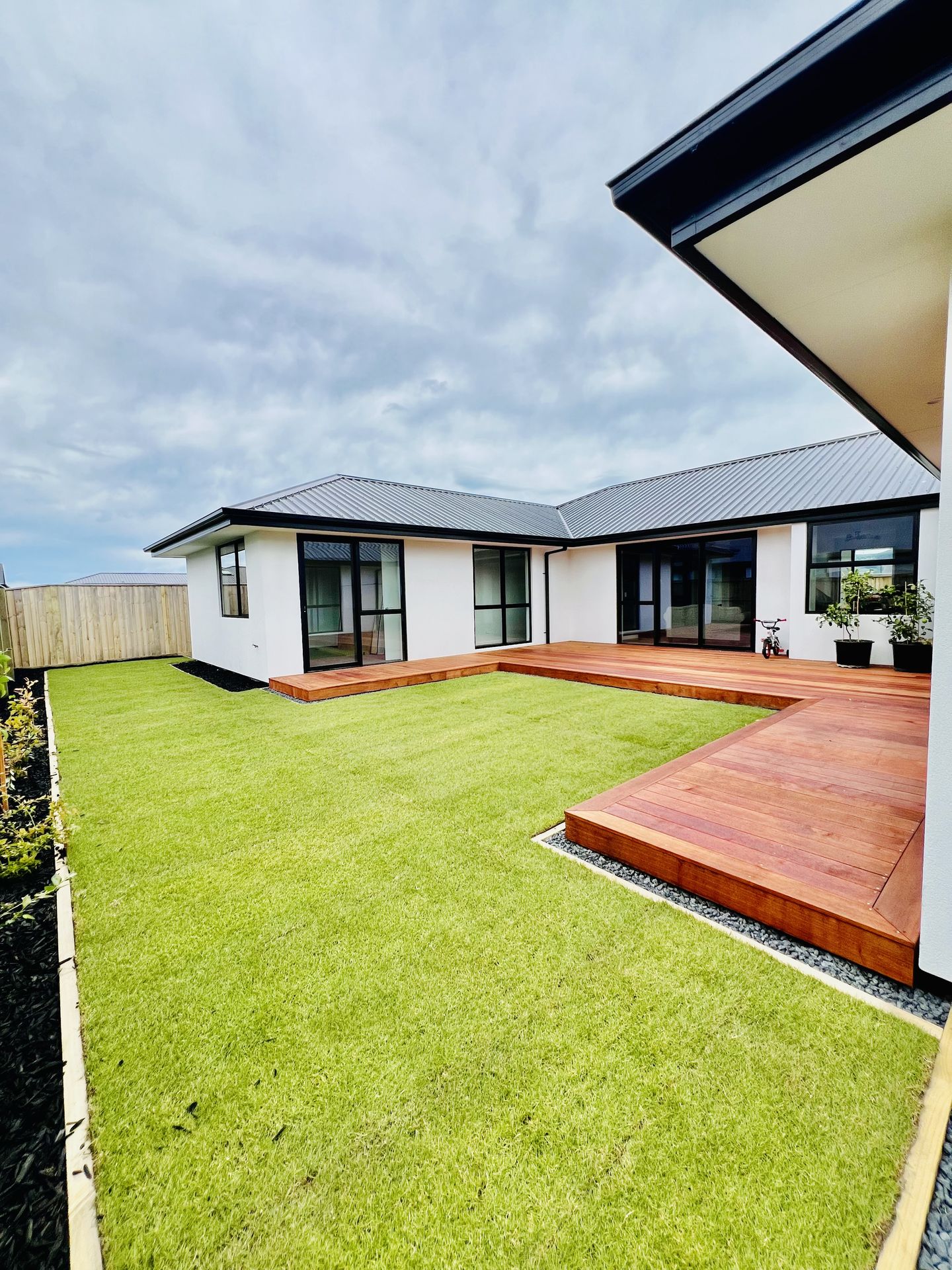
Choosing between timber and composite decking is one of the first decisions homeowners face when planning an outdoor deck in Canterbury. Both materials can handle our local conditions — frosty winter mornings, strong nor’west winds and long summer UV exposure — but they behave very differently over time. Here’s how they compare, so you can choose the right deck for your home, budget and maintenance appetite.
Appearance and Feel
Timber decking — typically hardwood or treated pine — has a natural grain and warmth that’s hard to replicate. It ages gracefully when maintained, developing a rich patina, and can be sanded and re-oiled to look close to new. Composite decking is manufactured from a blend of wood fibre and recycled plastic, giving it a consistent colour and finish across every board. It won’t warp, splinter or show knots, which suits homeowners who want a clean, uniform look with less upkeep.
Maintenance
This is where the two materials diverge most. Timber decking needs regular care — typically an annual oil or stain to protect it against Canterbury’s UV levels and winter moisture, plus occasional sanding to keep the surface smooth. Skip maintenance and timber will grey, dry out and can start to crack. Composite decking is largely maintenance-free: an occasional wash with soapy water is usually enough to keep it looking sharp, since the boards don’t need oiling, staining or sanding.
Durability in Canterbury’s Climate
Canterbury’s mix of hard frosts, hot dry nor’westers and heavy autumn rain puts real stress on outdoor materials. Quality hardwood decking, properly installed with adequate ventilation underneath and maintained yearly, can perform well for decades. Composite boards are engineered to resist moisture absorption, fading and insect damage, and most manufacturers back them with 15–25 year warranties. If your section is exposed to full sun or you’d rather not think about decking maintenance again, composite has a clear advantage here.
Cost and Lifespan
Timber decking generally has a lower upfront material cost, which is why it remains a popular choice for homeowners working to a tighter budget. Composite decking costs more per square metre at installation but saves on maintenance costs and time over the life of the deck. When comparing quotes, it’s worth weighing the installed price against the ongoing cost of oil, stain and your own time over 10–15 years, not just the day-one number.
Which Should You Choose?
If you enjoy the natural look of timber and don’t mind an annual maintenance routine, quality hardwood decking is still an excellent option and typically the more budget-friendly starting point. If you want a deck that looks the same in ten years with minimal upkeep — particularly for busy households, rental properties or full-sun sites — composite decking is usually the better long-term investment.
We’ve installed both timber and composite decks across Christchurch, Rolleston, Lincoln and Halswell as part of our fencing and decking service. You can see examples of our completed deck builds in our project gallery.
Get Expert Advice for Your Deck
Not sure which option suits your section, budget and lifestyle? Request a free quote and we’ll talk you through the right decking option for your Canterbury property, with no-obligation pricing for both timber and composite builds.